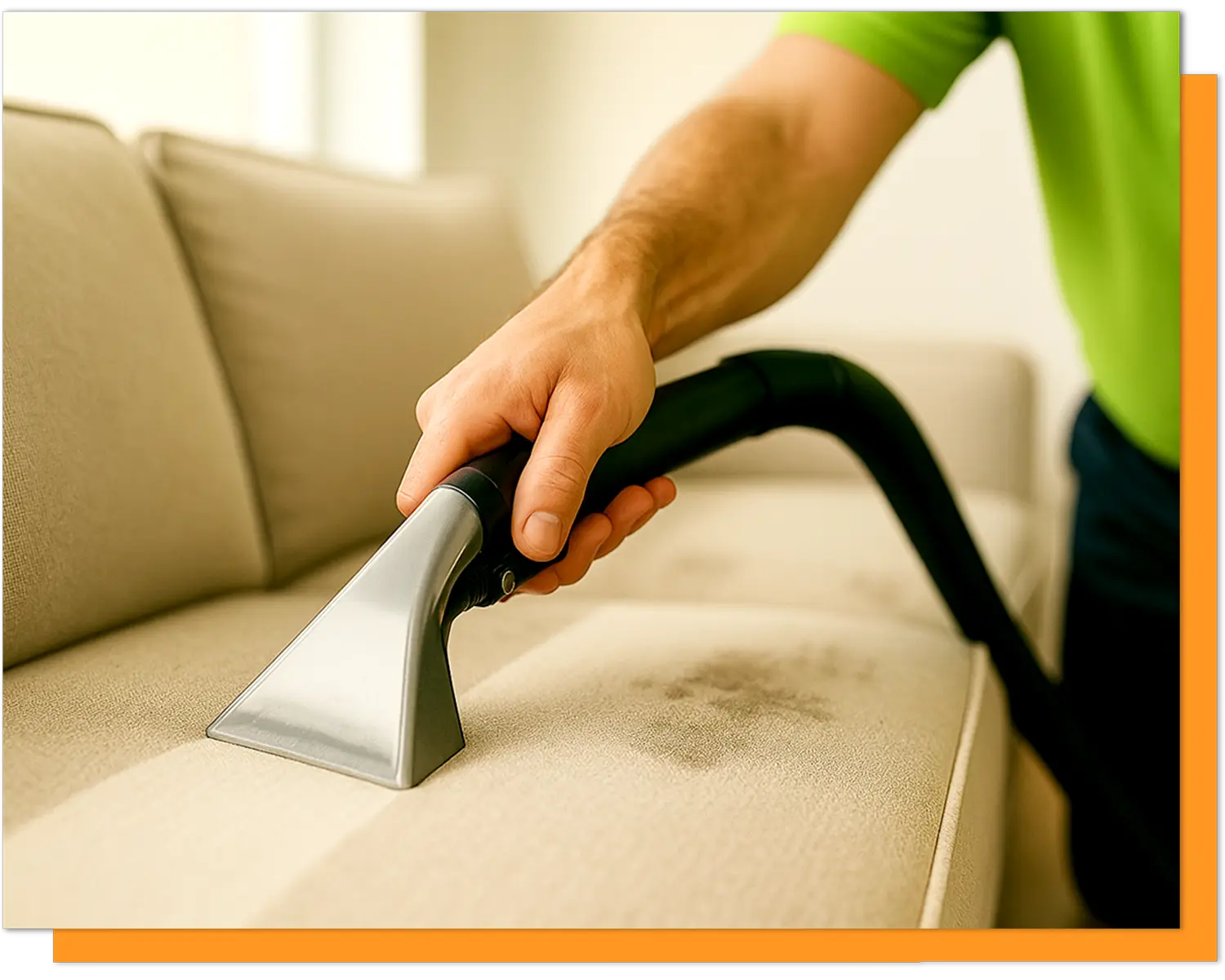



Clean a Sofa at Home Without Damaging the Fabric

This guide explains what you can safely do yourself and when it makes more sense to stop before causing permanent damage.

Fill out the form below 

TO GET YOUR BEST CLEANING OFFER

Why Cleaning a Sofa at Home Is Riskier Than It Looks

Most problems don’t come from the stain itself, but from how the fabric reacts to moisture and friction.

When people try to clean a sofa at home, they often run into:

Upholstery holds more moisture than it seems, and once it reaches the padding, the problem becomes harder to control.

Clean white sofa in a modern living room after professional upholstery cleaning

How to Clean a Sofa at Home Safely

If the stain is fresh and limited to the surface, careful cleaning can help. The goal is to control moisture and avoid spreading contamination deeper into the fabric.

Upholstery cleaning NYC

Check the Fabric Code

Before you clean a sofa at home, find the care label under the cushions. Most sofas are marked W for water-based cleaning, WS for water or solvent, S for solvent only, or X for vacuum only, and using the wrong method can damage the fabric.

Upholstery cleaning NYC

Remove Dry Soil First

Vacuum thoroughly before applying any liquid. Dust and debris turn into mud when wet and can spread through the fibers.

Upholstery cleaning NYC

Use Minimal Moisture

Lightly dampen a clean cloth with distilled water and a small amount of mild detergent. Avoid soaking the area. Over-wetting is the most common cause of water marks.

Upholstery cleaning NYC

Blot Instead of Scrubbing

Press and lift gently. Scrubbing can damage fibers and create uneven texture once the fabric dries.

Upholstery cleaning NYC

Remove Residue

Blot again using clean water to remove detergent. Leftover residue often causes the area to attract dirt faster.

Upholstery cleaning NYC

Dry Evenly

Use airflow, not heat. Keep cushions upright and allow the area to dry evenly to prevent rings.
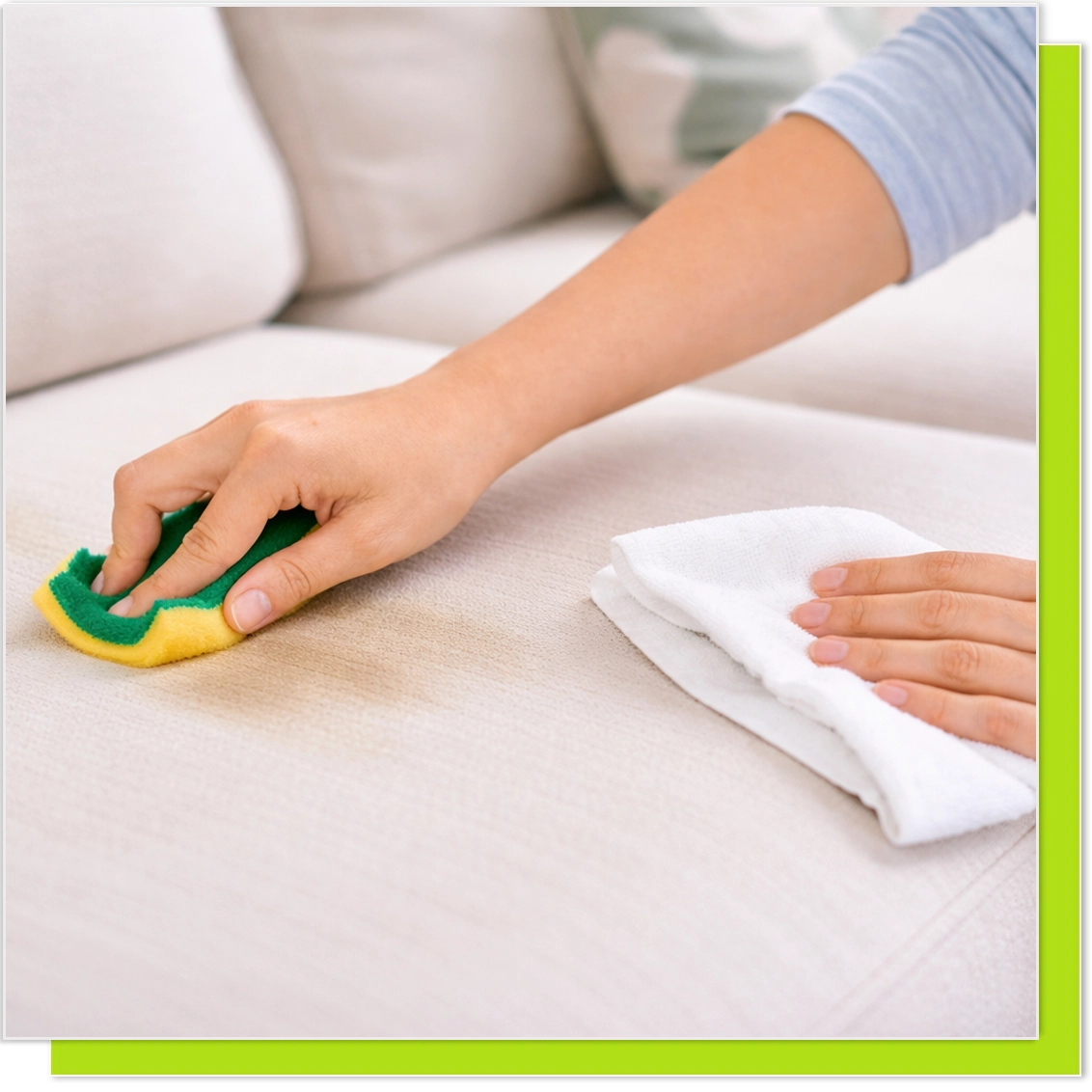
Light surface stains may improve with this method, but deeper contamination inside the padding cannot be fully removed with home cleaning.

When Cleaning a Sofa at Home Can Make Things Worse

Sometimes the safest decision is to stop.

If you try to clean a sofa at home and notice that the stain fades while wet but returns after drying, the fabric starts to feel stiff, or the cleaned area looks darker than the rest, the issue has likely moved below the surface.

The same applies to oil-based stains, pet urine, or situations where multiple cleaning attempts have already been made. Each additional attempt can push residue deeper into the cushion.

At this stage, further DIY cleaning usually makes the result less predictable.

Manual spot cleaning of a white sofa using a sponge and microfiber cloth
Upholstery cleaning New York

Why Professional Sofa Cleaning Is More Effective

Professional sofa cleaning is not about applying stronger products. The difference is in how moisture, extraction, and drying are controlled.

Instead of surface wiping, the process focuses on removing soil from inside the fabric and padding. Each material reacts differently, so the approach is adjusted based on the fabric type and condition.

Controlled extraction removes embedded dirt and oils, while proper rinsing prevents residue from staying in the fibers. Even drying reduces the risk of wicking and uneven shading.

This approach is especially important when a sofa has already been partially cleaned at home.

Not Sure If It’s Safe to Clean Your Sofa at Home?

If you’re unsure whether your sofa can be cleaned safely without damage, it’s better to check before experimenting. A quick assessment can prevent permanent marks or texture changes.

Our Sofa Cleaning Guarantee

After the sofa has fully dried, take a moment to check the cleaned areas in normal lighting. Some results can only be evaluated once the fabric has completely settled.

If anything looks uneven or needs additional attention, reach out. In some cases, a second adjustment may be needed due to how moisture and residue move within the fabric. If that happens, we return and correct it at no additional cost.

The goal is a clean result that looks natural, even, and consistent.

Manual spot cleaning of a white sofa using a sponge and microfiber cloth

When Cleaning a Sofa at Home Can Make Things Worse

Sometimes the safest decision is to stop.

If you try to clean a sofa at home and notice that the stain fades while wet but returns after drying, the fabric starts to feel stiff, or the cleaned area looks darker than the rest, the issue has likely moved below the surface.

The same applies to oil-based stains, pet urine, or situations where multiple cleaning attempts have already been made. Each additional attempt can push residue deeper into the cushion.

At this stage, further DIY cleaning usually makes the result less predictable.

Why Professional Sofa Cleaning Is More Effective

Upholstery cleaning New York

Professional sofa cleaning is not about applying stronger products. The difference is in how moisture, extraction, and drying are controlled.

Instead of surface wiping, the process focuses on removing soil from inside the fabric and padding. Each material reacts differently, so the approach is adjusted based on the fabric type and condition.

Controlled extraction removes embedded dirt and oils, while proper rinsing prevents residue from staying in the fibers. Even drying reduces the risk of wicking and uneven shading.

This approach is especially important when a sofa has already been partially cleaned at home.

Our Sofa Cleaning Guarantee

After the sofa has fully dried, take a moment to check the cleaned areas in normal lighting. Some results can only be evaluated once the fabric has completely settled.

If anything looks uneven or needs additional attention, reach out. In some cases, a second adjustment may be needed due to how moisture and residue move within the fabric. If that happens, we return and correct it at no additional cost.

The goal is a clean result that looks natural, even, and consistent.

Reviews

FAQ About Cleaning a Sofa at Home

Can I clean any sofa at home?

Not all fabrics respond the same way. Some materials can be safely spot cleaned, while others require dry methods or professional treatment to avoid damage

Why do stains come back after cleaning?

This is usually caused by wicking. Moisture pulls dirt from inside the cushion back to the surface as the fabric dries.

How much water should I use?

Less than you think. Most damage comes from over-wetting rather than from the cleaning product itself.

Can home cleaning remove odors?

Surface cleaning may reduce odor temporarily, but smells trapped in the padding often require extraction to be fully removed.

Is it better to clean the whole sofa or just one spot?

Cleaning only one area can create visible contrast. In many cases, full cleaning produces a more even result.

What payment methods do you accept?

We accept cash and all major credit and debit cards. Payment is due upon completion of the service.

Who will clean my furniture?

Our team consists of trained professionals who understand fabrics, stain chemistry, and advanced cleaning techniques. Every technician is background-checked and committed to delivering spotless results with care.