

Velvet, linen, and other delicate upholstery can look beautiful in a New York apartment—and intimidating when a spill appears. If you are searching for delicate upholstery cleaning in NYC, the first question is not how powerful the cleaning machine is. It is whether your particular sofa can tolerate the proposed process without damage.
Two couches that look nearly identical may have different fibers, dyes, backings, and finishes. A careful professional assessment should come before any cleaner, steam, or water is applied. That is how you protect the furniture while setting realistic expectations for stain removal.
Why delicate upholstery is different
Upholstery can react to excess moisture, heat, friction, and unsuitable cleaning chemistry. Depending on the construction, the result may be watermarking, shrinkage, browning, dye transfer, or a change in the texture of the fabric. Those effects may only become visible once the couch dries.
There is another complication: moisture can travel through the face fabric into cushion layers, backing, or padding. As it evaporates, residue or contamination can migrate back toward the surface. That is one reason a spot may look better when wet and then reappear later.

Can a velvet couch be professionally cleaned?
Sometimes, yes. But velvet is a type of pile fabric, not a single fiber. A velvet sofa may contain polyester, cotton, silk, rayon, or blends. Some synthetic velvets respond well to an appropriate method; others are much more sensitive to water and agitation.
Never assume that a handheld steamer is safe just because you saw a similar couch cleaned online. Heat and moisture can flatten or distort the pile. A responsible cleaner will assess the material, review the care guidance, and test an inconspicuous area when appropriate before selecting a treatment.
Cleaning can remove compatible soil, but it cannot rebuild flattened or abraded fibers. If your sofa looks shiny or gray in frequently used areas, part of what you see may be wear rather than dirt. Read our guide to couch stains versus permanent discoloration before expecting every area to return to a uniform appearance.
Linen, cotton, viscose and natural-fiber sofas
Linen and cotton may be susceptible to shrinkage, water rings, or browning if cleaned incorrectly. Rayon and viscose deserve particular caution: moisture can affect their appearance and strength. Fiber content is important, but so are dyes, finishes, the fabric’s age, and previous cleaning attempts.
A product described as gentle, natural, or safe for most fabrics is not automatically appropriate for delicate upholstery. Even plain water can create a visible boundary on a sensitive material. A professional may recommend controlled low-moisture cleaning, a suitable solvent-based approach, or avoiding wet cleaning altogether.
What a careful fabric assessment looks like
- Check the care label and identify the fabric or blend where possible.
- Inspect worn pile, dye stability, seams, backing, and existing rings.
- Ask which household stain removers or machines were previously used.
- Test a discreet area when the cleaning response is uncertain.
- Choose moisture, agitation, chemistry, extraction, and drying support for the actual piece—not a generic sofa.
This matters even more for vintage pieces, expensive sectionals, light-colored furniture, and upholstery with old or unknown stains. A trustworthy technician should explain when a mark may remain, or when the safest choice is not to clean a particular material with water.
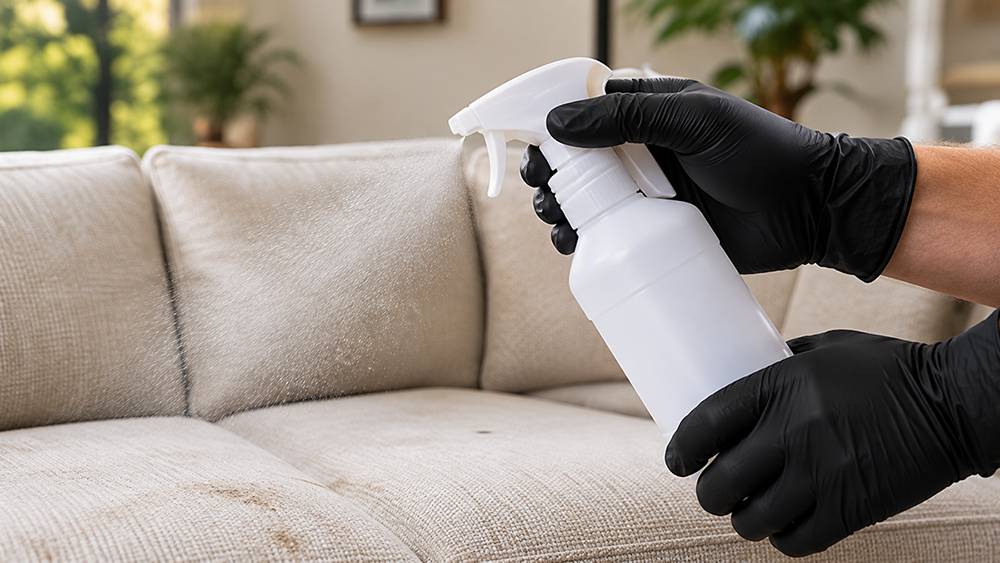
Three mistakes to avoid before your appointment
1. Scrubbing a fresh spot
Aggressive rubbing can spread the contaminant, create fuzzing, or distort a delicate pile. Blot a fresh liquid spill gently with a clean, absorbent, colorfast cloth instead. Avoid working the stain into the fabric.
2. Mixing several stain removers
Layering products can leave residue, cause unwanted reactions, or make later professional treatment harder. Tell the technician exactly what was applied, even if it was several weeks ago. That information helps explain unexpected discoloration or residue.
3. Adding more water to remove a ring
A ring may come from migrating residue, dye movement, or previous wetting. Repeatedly soaking the area can enlarge the mark. If it returns after drying, stop experimenting and arrange an assessment rather than extending the damage.
Preparing for cleaning in an NYC apartment
Clear the cushions and surrounding space so the technician can inspect the sofa. Photograph problem areas and share the care label if you can locate it. Mention pet accidents, previous DIY treatments, and areas that seem worn rather than stained.
If your building uses a service elevator, requires advance notice, or requests a certificate of insurance, arrange access ahead of time. Our NYC couch-cleaning COI guide explains what to check with management. For typical drying considerations, see our professional couch-cleaning drying guide.
What results should you expect?
A suitable cleaning method can improve everyday soil, oils, and certain stains without treating every material the same way. But cleaning cannot reverse abrasion, sun fading, bleaching, or crushed pile. Delicate textiles may also have limits on how much moisture or agitation can be applied safely.
Ask whether the provider inspects sensitive fabrics before cleaning and whether the recommended treatment is compatible with your upholstery. Those questions are more useful than a blanket promise that every stain will disappear.
Not sure whether your couch can be cleaned safely?
Send YourCleanCouch a photo, stain details, and any fabric label information. Start with a fabric assessment instead of risking an expensive DIY mistake.
Frequently asked questions
Is steam cleaning safe for every velvet sofa?
No. Different velvet fibers and constructions respond differently. Identify and test the fabric before using heat or moisture.
Can a professional remove a water ring from linen?
Sometimes. The outcome depends on what caused it, whether dyes moved, and whether the fiber or finish was permanently altered.
Will cleaning restore worn or faded upholstery?
No. Cleaning may remove soil and improve appearance, but it cannot reverse UV fading, physical wear, or bleaching.
Should I use a home stain remover on vintage furniture?
Not without verifying the care requirements. Fragile fibers and unstable dyes can make a routine product unexpectedly risky.