A portable upholstery cleaner can be useful for a fresh spill or a small maintenance job. But it is not the same thing as professional couch cleaning. The difference comes down to water recovery, cleaning chemistry, fabric assessment, treatment depth, and how much residue is left behind after the fabric dries.
If you are deciding between renting or buying a small machine and booking a professional cleaner, the right choice depends on the size and type of problem. A light, recent spot may be manageable at home. A full sofa with embedded soil, recurring odor, darkened armrests, old stains, or previous DIY residue is a different job.
What a portable upholstery cleaner does well
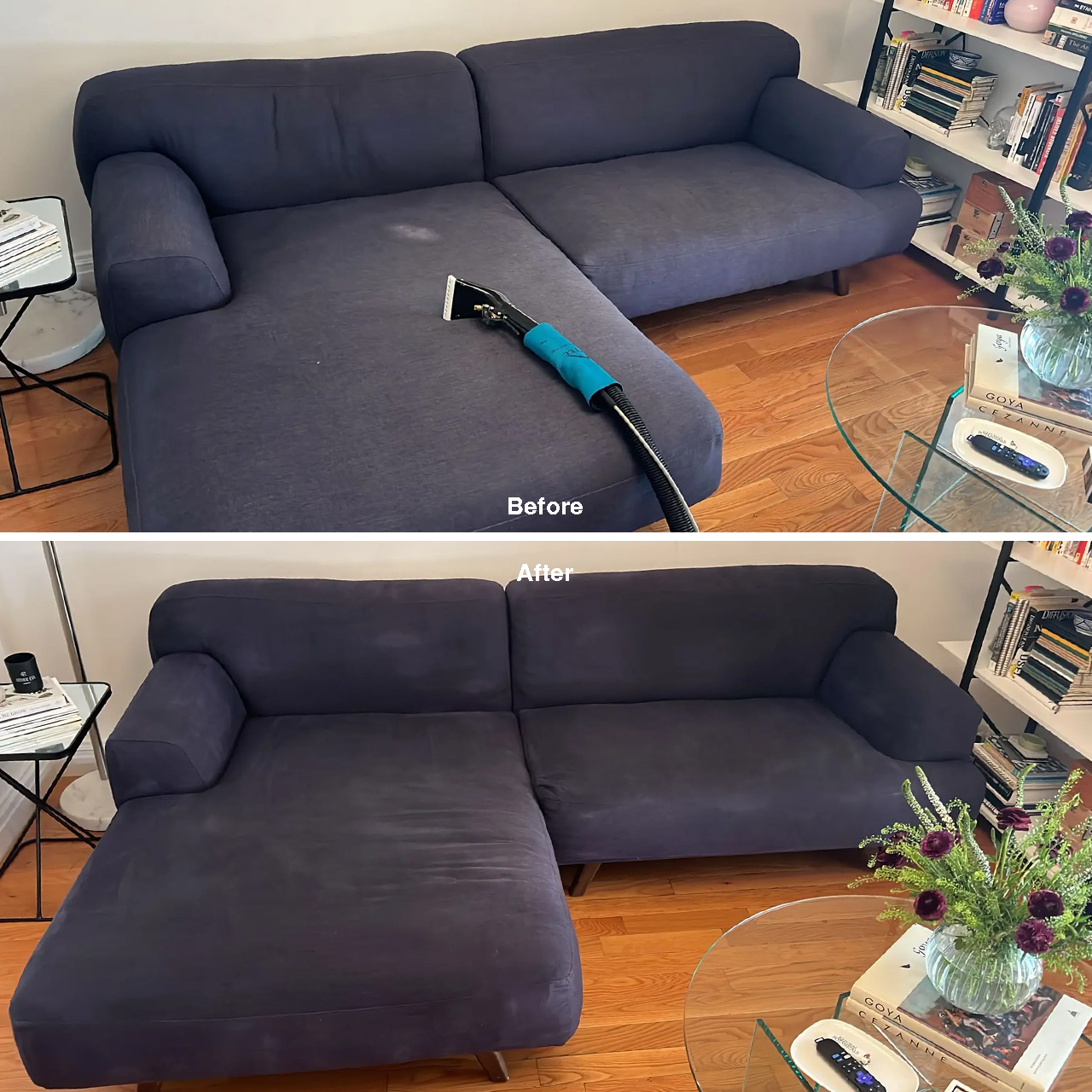
Small extraction machines are convenient because they spray cleaning solution into the fabric and vacuum some of that moisture back out. For a fresh food spill, a small muddy area, or routine maintenance on a compatible synthetic fabric, that can be enough.
The limitation is that compact machines generally have less vacuum recovery and less control over how much solution is being applied. It is easy to keep spraying because the fabric still looks dirty, then discover several hours later that the cushion is much wetter below the surface than expected.
That does not make portable machines useless. It makes them better suited to controlled spot cleaning than to treating an entire sofa as though it were carpet.
Why extraction strength matters
The cleaning step is only half the job. The other half is recovering moisture, suspended soil, and cleaning residue from the upholstery. Better recovery helps reduce how much liquid remains in the fabric and cushion after cleaning.
When too much moisture stays behind, drying takes longer and wick-back becomes more likely. A spot can look gone while the fabric is damp, then become visible again as moisture carries residue back toward the surface.
Professional extraction equipment is designed to apply and recover solution efficiently over larger upholstered areas. That matters on sectionals, thick cushions, attached backs, and sofas that have years of body oils and household soil rather than one isolated spill.
Cleaning chemistry matters as much as the machine
One of the most common DIY mistakes is assuming that stronger detergent means cleaner fabric. Upholstery can react badly to the wrong chemistry. Excess alkalinity, soap residue, aggressive stain products, or repeated application of different cleaners can create discoloration, stiffness, rapid resoiling, or a visible ring around the treated area.
A professional cleaner should assess the upholstery before applying products and choose a process that matches the material, construction, and condition of the piece. This is especially important when the care label is unclear, the sofa is light-colored, or several household products have already been used on the same stain.
Portable machines do not solve every odor problem
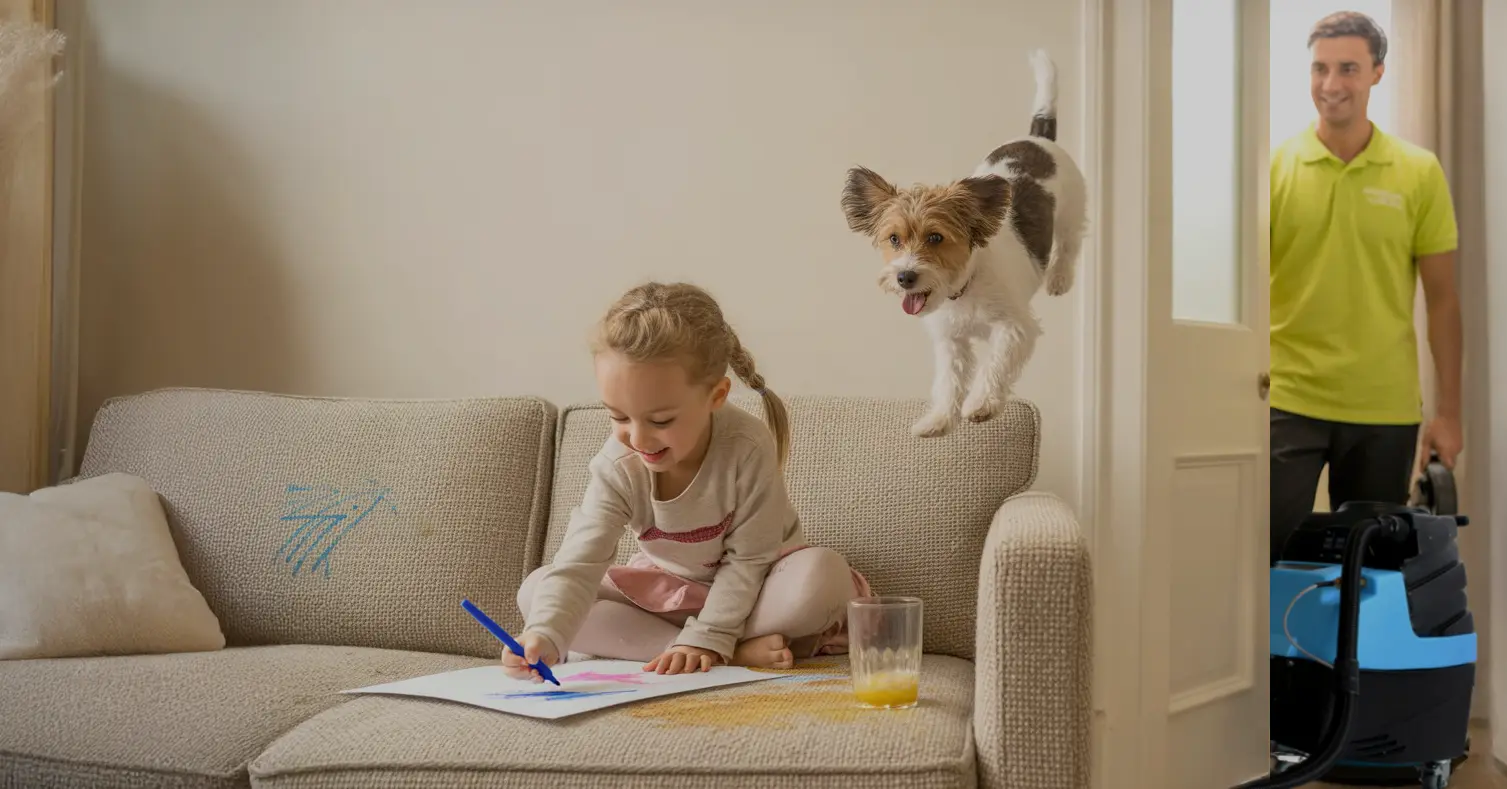
Odor is where DIY extraction is most likely to disappoint. If pet urine, milk, vomit, or another organic contaminant has penetrated below the face fabric, cleaning only the visible surface may make the sofa look better while leaving the source inside the cushion or backing.
This is also why adding more fragrance is not a solution. Odor treatment has to target the contamination itself. Depending on where liquid traveled, treatment may need to reach beyond the surface upholstery. When contamination has reached inaccessible foam, wood, backing, or flooring, complete odor removal cannot always be guaranteed.
If pet odor is the main problem, read our pet odor removal guide before deciding whether a small machine is enough.
When DIY cleaning is a reasonable choice
- The spill is fresh and limited to a small area.
- The fabric care instructions allow water-based cleaning.
- There is no recurring odor after the area dries.
- The cushion has not been heavily saturated.
- You are using one fabric-appropriate product instead of mixing several cleaners.
Blot first, use the minimum amount of moisture necessary, and avoid aggressive scrubbing. Friction can distort the texture or push contamination deeper into the fabric.
When professional couch cleaning makes more sense
Professional service is usually the better option when the entire sofa looks dull or uneven, high-contact areas are darkened, stains are old, the fabric is light-colored, odor returns after drying, or the couch has already been treated several times with household products.
It also makes sense when you do not want to gamble with an expensive sofa. A failed DIY attempt can make the professional job harder later because the cleaner has to work through both the original contamination and residue from products applied afterward.
For current pricing, see our 2026 NYC couch cleaning price guide. If drying time is part of your decision, our guide to how long a couch takes to dry after professional cleaning explains what affects it. You can also review our professional couch cleaning service.
The practical bottom line
A portable upholstery cleaner is a useful household tool. It can help with small, fresh problems and routine maintenance. What it cannot reliably replace is a full professional process when soil is widespread, the fabric is sensitive, stains are established, or odor has moved below the surface.
The smarter question is not whether portable machines are good or bad. It is whether the problem is simple enough to handle safely at home. If the answer is uncertain, sending a photo before doing anything aggressive can save both the fabric and the cost of correcting a DIY mistake later.
Not sure if your couch needs professional cleaning?
Send us a photo and a few details, or book your upholstery cleaning online.
Frequently Asked Questions
Can a portable upholstery cleaner deep-clean an entire couch?
It can clean upholstery, but the result depends on the machine, fabric, soil level, and how much moisture is left behind. For heavily soiled or large sofas, professional equipment and process control are usually more appropriate.
Can DIY couch cleaning cause stains to come back?
Yes. If residue or contamination remains below the surface, a spot can reappear as the fabric dries. This is often called wick-back.
Is professional cleaning safer for a white or light-colored sofa?
It can be, especially when fabric type, previous products, or stain history are uncertain. Light upholstery tends to show uneven treatment and residue more clearly.
Should I use a rental machine on pet urine?
A rental or portable machine may clean the surface, but pet urine can travel deeper into cushions and backing. If odor returns after drying, professional odor treatment is usually the better next step.